



As each year comes to a close, I wake early in the morning to perform the same sacred ritual.
I slowly enter my local coffee cathedral where a pour-over is delicately prepared by my barista, and I sip each and every blueberry, citrus, and stone fruit note.
As the steam rises beside me, I take a deep breath in and bow slightly before my consecrated tools, gently placing my headphones onto my head, a silent signal to everyone around me.
Do not disturb. Vision is happening here.
The ritual begins. It’s then time for me to craft and create my future.
But here’s the fatal flaw with my ritual: it’s done without humility or ever opening my hands and asking “where is the Lord leading me?”
I proceed with the grim determination of a man who believes that sufficient planning will eliminate any surprises in his future. That enough personal planning and yearly reviews can give me the ultimate sovereignty I so desperately desire.
I draft the year as if it were finished. I plan as if my summer won’t arrive with its own ideas. My big, “hairy,” audacious goals exist as if the people I’m planning for are characters in my story rather than protagonists in their own.
The plan grows dense and detailed. Thirty carefully curated pages. Metrics for things that haven’t happened yet (but I’m certain will!). Milestones that assume nothing breaks, no one gets sick, and no grief arrives unannounced to wreck everything I thought mattered.
This is my recurring restless rhythm that preaches to me that my worth is measured by my output and my value is proven by what I produce.
To peer into my mind as I sit inside that coffee shop is to see a frantic pace that never stops because stopping feels like I’m just falling behind.
The Messy Middle
What I’ve learned is that the messy middle always arrives for the driven striver.
In the spring of 2018, it showed up on what should have been the greatest day of my professional life.
I’d spent years preparing to open my first restaurant. Years. Every system designed, every detail planned, every contingency mapped. The vision was glorious and I was confident I would achieve and be recognized as the greatest Rookie Operator of all time.
Grand opening morning arrived. The parking lot was full. The team was ready. Everything I’d worked toward was finally happening. The lines were out the door.
And then my phone rang.
My youngest daughter had been rushed to the hospital. Gravely ill. The doctors weren’t sure what was wrong yet, but it was serious enough that I needed to come immediately.
I remember standing in that parking lot, customers streaming past me into the restaurant, my team looking to me for leadership, and my wife’s voice on the phone saying “You need to be here.”
I was torn in half. My daughter needed me at the hospital. My business—the thing I’d prepared my whole life for—needed me there.
I decided to choose both, which meant I wasn’t actually fully present for either.
I spent the next several weeks traveling between dark hospital rooms and bustling restaurant crises. Hiring decisions I should have made carefully, I made frantically and furiously. Systems I should have supervised closely, I tossed and delegated to people who weren’t even remotely ready. The foundation I thought I’d built so carefully started cracking under the weight of my divided attention.
My daughter recovered. But the business damage was done. I’d lost control of the hiring process. I’d made decisions out of desperation rather than wisdom. The carefully constructed plan had met reality, and reality had won.
And here’s what I did in response: I gripped tighter and worked harder.
I didn’t pause and say, “Oh, Jesus is speaking to me in this moment. I should listen.”
I said, “Something is wrong. Therefore, I need to execute harder.”
I took more work onto my own plate. I fired up some YouTube videos of David Goggins screaming at me and asking “Who will carry the boats?!”
I will carry the boats! I screamed back. I’ll carry them through sheer force of will! Through relentless intensity!
It’s almost laughable now, but it was more true than I’d like to admit. I spent the next few years trying to fix what had broken in those opening weeks. Working longer hours. Making up for early mistakes. Never slowing down and always speeding up. I became a man I hardly recognized, a man angry and frustrated, unable to get out from under the mess he’d created.
The business survived. Eventually, it even thrived. But in those early years I was exhausted, my health was in disarray, and the whole thing had the energy of a forced march rather than a clear calling.
Baptized Anxiety
I’ve been thinking about that year a lot lately, because I’m starting to see it clearly: my unrelenting work wasn’t faithfulness. It was anxiety wrapped with religious language.
“Stewardship” became my justification for never resting. “Faithfulness” became my excuse for never asking if God was actually asking this of me. “Diligence” became the word I used when what I really meant was “terrified of failure.”
I’d baptized my anxiety and called it obedience.
It’s the most dangerous kind of drivenness because it sounds righteous. I wasn’t chasing money or status, I was “serving the mission.” I wasn’t being selfish, I was “maximizing impact.” I wasn’t controlling my team, I was “being responsible.”
But underneath all that spiritual language was a simple, terrifying lie I was believing: if I don’t hold this all together, it will fall apart. If I don’t execute perfectly, I’ll be exposed as insufficient. If I stop moving, I’ll discover I’m not actually enough.
My friend Andrew Clark describes this reality as living life as “driven” rather than “called.”
Driven means the plan is lord. Called means the Lord gets to decide what actually matters.
And for the longest time I was choosing the driven life. Because driven felt like faithfulness and stewardship, when really it was just fear with a crisp and clean productivity system.
The Friction
I wish I could tell you I had some profound spiritual breakthrough that changed everything overnight.
I didn’t.
What happened was slower and more frustrating: I kept breaking. Different versions of that fateful first year kept arriving. Different plans kept colliding with reality. Different people kept not fitting the roles I’d assigned them in my head.
And somewhere in the repetition, I started to notice a pattern: every time reality destroyed my plan, I experienced it as failure. Every time someone said “I can’t,” I heard “You’re not enough.” Every time circumstances shifted, I felt like I was losing control of my life.
The problem wasn’t necessarily the plans.
The problem was that my identity was wrapped up in the desperate need for the plans to work. My identity and my desires were completely warped.
I remember sitting in my car after another “the plan isn’t working” conversation, and instead of immediately jumping to solutions, I just sat there. Exhausted. And I asked out loud: “What am I so afraid of?”
The answer was so clear: I’m afraid that if I’m not in control, everything will fall apart. I’m afraid that if I surrender, I’ll discover I don’t actually matter. I’m afraid that if I stop striving, I won’t be fully loved or fully known anymore.
It wasn’t a lightning bolt moment. It was more like finally admitting something I’d known for years but kept avoiding.
I have learned this frustrating yet beautiful truth: instead of gripping tighter and exerting maximum effort, I need to surrender.
Simple to say. Agonizingly difficult to do.
The early Christian monks who fled to the Egyptian desert in the 3rd and 4th centuries had a word for what I’m actually after: apatheia. It’s “freedom from reactive passions. Acting from clarity rather than compulsion, love rather than fear, trust rather than control.”1
It’s not apathy like checking out or not caring, but freedom from being enslaved by the outcomes. It’s the capacity to still plan with full intensity while holding the plan loosely enough that reality can correct you. To execute relentlessly without your identity being held hostage by whether the plan actually works.
Not indifferent to results, just no longer terrified of them.
This is what I’m after.
But I’m not fully there yet. I’m still learning to let go. I still grip too tight when things feel uncertain. I still default to “work harder” when what I actually need to do is “listen better.”
Sacred Pace
Terry Looper calls us to a “sacred pace,” a rhythm of seeking the Lord where you still work hard but your identity isn’t found through relentless control—it actually comes from a posture of surrender.2
It’s the place where you stand as a faithful steward, but you’re not terrified of what happens if things don’t go according to plan, knowing your true identity is secure — and you’d rather follow Jesus and his plans regardless of the outcome. It’s a clear-eyed presence that can hold intensity without needing to control everything, because you know the One who is in control.
I want that freedom, but it requires the one thing I’ve spent years avoiding: surrender.
If Terry were speaking to me, I’m certain he would encourage me to ask the Lord for suffering that will drive me to surrender—a surrender that will align my will with the Lord’s will.
Because the plans I grip tightest are always the ones born from fear. If I’m honest with myself, my end-of-year ritual is my attempt to speak an incantation against the terror of not knowing and controlling my future.
But the Lord calls me to let go of my outcomes. Not because outcomes don’t matter, but because when I’m enslaved to them, I can’t actually discern what He desires of me. I’m too busy protecting my plan to notice where He is calling me to go.
Without stillness and surrender, planning becomes just another form of religious busyness. It’s my way to stay occupied enough that I don’t have to sit with the uncomfortable truth that I’m not actually sovereign over my universe.
What This Year Requires of Me
This December, I’m still planning.
I’ll be sitting in the same coffee shop. Same pour-over. Same leather notebook. But this year, I’m starting differently.
Before I open last year’s goals, before I pull out my spreadsheets, I’ll spend thirty minutes with a simple Examen prayer, a new practice I’ve started this year.
I asked: “Lord, what were you doing this year that I almost missed because I was too busy executing my plan?”
And slowly, things will surface.
I’m planning differently this year. I’m writing down three goals instead of thirty. And I’m holding even those with loose enough hands that God can redirect me without it feeling like failure.
I’m blocking margin into my calendar to “get neutral,” as Terry Looper calls it.
Time to sit still and listen. To notice where I’ve been running with anxiety and calling it obedience.
I’m asking different questions this year.
Not just “Did we hit the number?” but “Is this still what the Lord is asking of us?”
Not just “What did I accomplish?” but “Who am I becoming?”
And I’m giving myself permission to be corrected and to change. To discover in May that what made sense in December doesn’t anymore.
David Benner has written extensively about ordered versus disordered desires.3
Disordered desires are frantic, grasping, self-protective. They’re the ones that say “I must achieve this or I’m not enough.” Ordered desires flow from abundance, not scarcity. They’re grounded in who God says I am, not what I think I need to prove.
Benner reminds us:
“Only when we are willing to desire nothing more than God can we experience the freedom of truly enjoying all things. Christian spirituality does not involve the destruction of desire. Rather it involves realignment of our desires by turning our hearts toward the Source of all Desire. God’s desires become our desires.”
So I’m asking: What do I actually desire for 2026? Not what do I fear will happen if I don’t perform, but what do I long for, from my true identity of being loved and enough already?
A Different Ritual
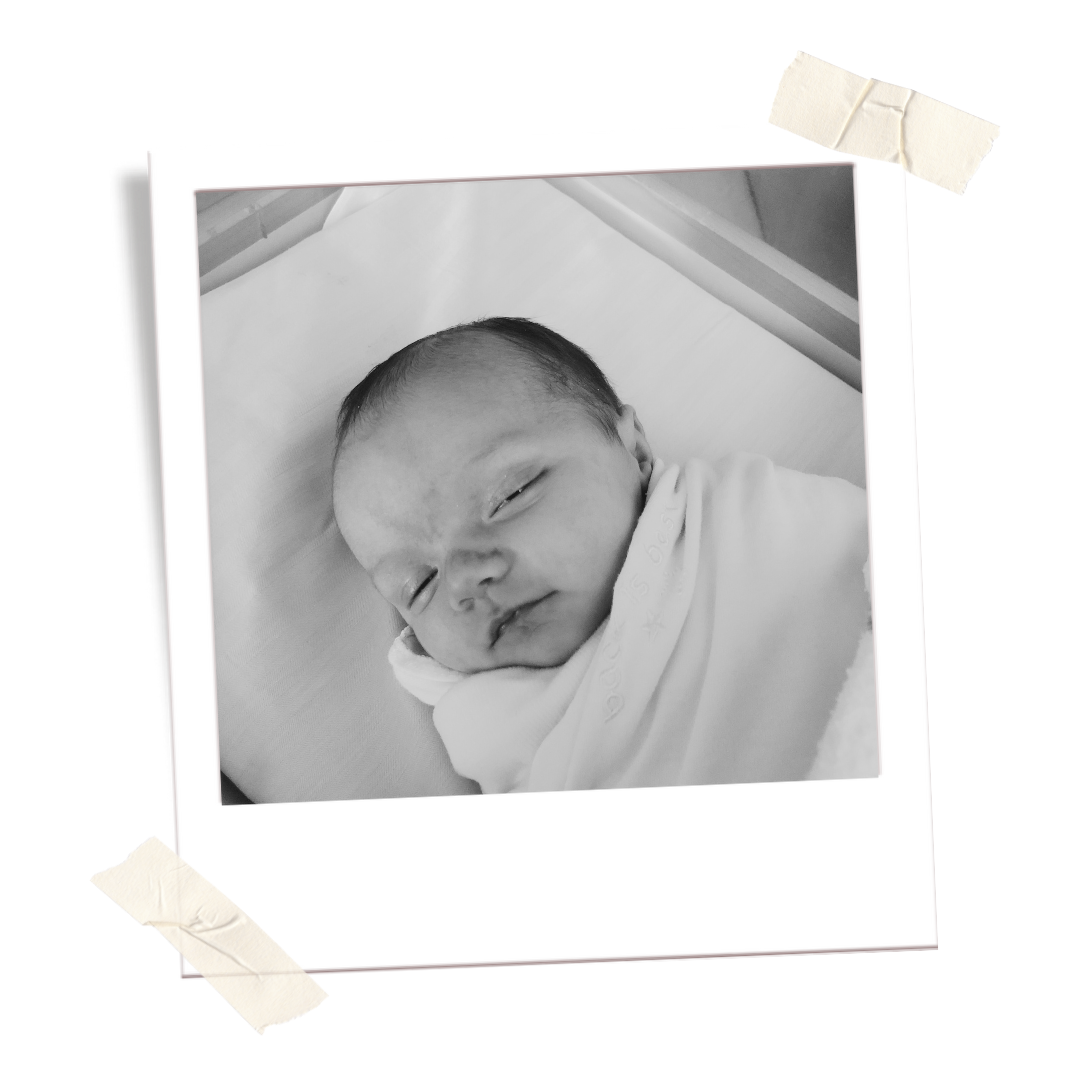
Before I answer that question, I’ll pull up a photo on my phone.
It’s from that hospital room in 2018. My daughter is asleep in the bed with my wife nearby—and I’m not in the picture. I was at the restaurant, trying to save the business, trying to prove I could “carry the boats.”
I can’t get that time back. I can’t redo those opening weeks. I can’t un-choose what I chose that year and the years following.
But I can choose differently now.
So this year, I’m writing those three goals. I’m blocking that margin. I’m asking “Who do you want me to be?” before I ask “What do I need to accomplish?”
And when my phone rings—and it will ring—I’m practicing the prayer of open hands before I reach for the planning tools.
I don’t know if I can actually do it.
I don’t know if I can sit still when everything within me wants to move. I don’t know if I can hold my plans loosely when my identity has been wrapped up in them working. I don’t know if I can trust that I’m loved and enough when I’m not producing and achieving.
But I’ll be sitting here in this coffee shop, looking at that photo, with my hands open and trembling.
Asking God to teach me what I’ve spent a lifetime avoiding:
That I’m His beloved son. Even empty-handed. Even when nothing goes according to my plan. Even when I miss the moment because I’m too busy trying to save it.
I’ll close the photo and set down my phone. The coffee will have gone cold, but I don’t reach for a refill yet. I’ll just sit.
This is surrender—not the grand gesture, but the small moment when you choose to remain present instead of running back to your plan.
Eventually, I pick up my pen.
My hands are still shaking.
But now they’re open.
P.S.
Thomas Merton’s prayer in Thoughts in Solitude, seems a perfect ending:
“My Lord God, I have no idea where I am going. I cannot see the road ahead of me. I cannot know for certain where it will end. Nor do I really know myself, and the fact that I think I am following your will does not mean that I am actually doing so. But I believe that the desire to please you does in fact please you. And I hope I have that desire in all that I am doing. I hope that I will never do anything apart from that desire. And I know that if I do this you will lead me by the right road, though I may know nothing about it. Therefore, I will trust you always though I may seem to be lost and in the shadow of death. I will not fear, for you are ever with me and you will never leave me to face my perils alone.”
The Desert Fathers were early Christian monks and ascetics who withdrew to the deserts of Egypt, Palestine, and Syria in the 3rd and 4th centuries AD to pursue radical spiritual formation. Their teachings, preserved in collections like The Sayings of the Desert Fathers, emphasize apatheia—not apathy or emotional detachment, but freedom from being controlled by disordered passions and enslaved by outcomes. It represents the interior stillness that allows for clear discernment and faithful action without compulsion.
Terry Looper, Sacred Pace: Four Steps to Hearing God and Aligning Yourself with His Will (Nashville: Thomas Nelson, 2019). Looper, a successful entrepreneur and investor, distinguishes between being “driven” by fear and outcomes versus being “called” by God’s purposes. His concept of “getting neutral” refers to creating intentional space to hear God’s voice apart from the noise of anxiety, ambition, and marketplace pressures.
David G. Benner, The Gift of Being Yourself: The Sacred Call to Self-Discovery (Downers Grove, IL: InterVarsity Press, 2004). Benner explores how Christian identity formation involves distinguishing between disordered desires (driven by fear and scarcity) and ordered desires (rooted in God’s love and abundance)
Really appreciate your thoughts here, Tim. Super encouraging and convincing. To the point, I shared it with my wife and told her, "If you want a snapshot into my brain, here it is." I'm going to send this along to my staff as well, in preparation for our start-of-the-year kick-off meeting. Thanks for taking the time to put this together, and for your openness and honesty. I read everything you write - keep up the good work, brother!
Really appreciated reading this. I’ve been in a very similar season over the past year — especially the last nine months. Realizing that my work had become (yet another) addictive loop of obsession and compulsion was strangely revelatory. I’m only surprised I didn’t see it sooner.
The tension of insisting that my plans must unfold exactly as I think they should — in order for me to feel okay — is so opposite of trusting and relying on God. And yet I can delude myself into believing I’m doing the former while living the latter. The warning signs were severe and frequent. What followed was the pendulum swing from burnout into work avoidance masquerading as rest.
What’s changing now is a slow reintegration of work — not just what has to get done to keep my business running, but the meaningful parts I had abandoned. Unsurprisingly, this shift has come alongside a deepening in faith and a more consistent demonstration of that faith in prayer and worship.
I honestly don’t remember who pointed me to your writing originally, but when I saw the phrase “Baptized Anxiety” I clicked through — skimmed once, then read it again. Thank you for sharing your experience with such clarity and thoughtfulness. It was a welcome reminder that I am not alone in this.